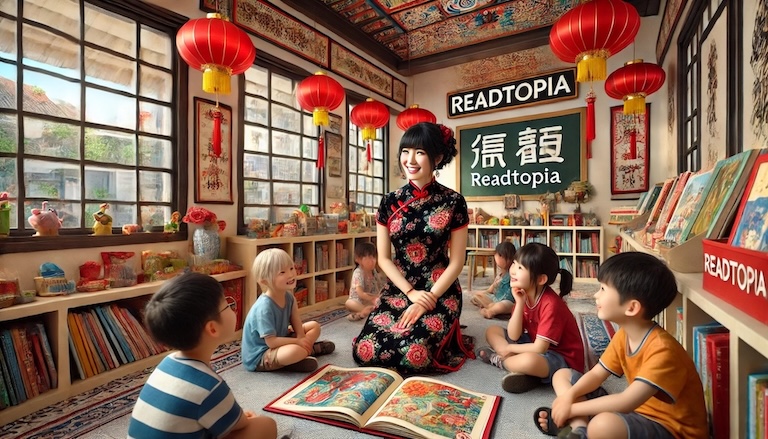
At Readtopia, we firmly believe that the simple act of reading picture books with children holds extraordinary power. It’s not just about sharing stories; it’s about shaping futures. A widely cited study published in Child Development Research [1] beautifully highlights how early reading significantly nurtures children’s language development, social skills, and future academic success. [actually, reading helps much more than academic success. For example, [Elon Musk Reveals His Voracious Reading Habits and Favorite Books][2] shows its huge impact on life-long development.
Reading Builds Strong Language Foundations
Language skills are the cornerstone of all learning, and the study reveals that early book reading offers children rich language exposure. Books often include more sophisticated vocabulary and varied sentence structures than day-to-day conversations. Picture this: when you read a story to your child, they’re absorbing new words, hearing how sentences work, and connecting words with images.
A key finding is that the earlier reading begins, the better. Even infants as young as 8 months benefit from exposure to books. At Readtopia, we integrate age-appropriate picture books in our classes because these moments of reading fuel children’s vocabulary growth and help them process language faster—a skill that is foundational to learning later in life.
Reading Sets the Stage for Academic Success
Parents often ask: How does reading affect future school performance? The research highlights that early language development directly predicts school readiness. Children who are exposed to books in their preschool years are better equipped to understand stories, grasp grammar, and tackle new vocabulary. By the time they start formal schooling, they already possess the tools to excel.
For children at Readtopia, our combination of Chinese picture books and IB-based inquiry learning ensures they develop strong reading and language skills in Chinese and also in congnitive development, building confidence, preparing them for future academic challenges.
Books Bring Joy and Imagination
Reading isn’t just about learning; it’s about joy, curiosity, and imagination. Picture books engage children visually and verbally, sparking their creativity. When teacher use dialogic reading—asking questions, making predictions, and relating the story to real life—children become active participants in the reading process. This interaction maximizes learning and turns reading into a playful, enjoyable experience.
Six Principles of Effective Reading and Parental Support
Children Need to Hear Many Words Often. Language growth relies on the quantity and quality of words children hear in their early years. Regular book reading introduces children to a broader vocabulary than everyday conversation, giving them exposure to rich and varied language. Parents can read aloud frequently and intentionally choose books that feature new words and concepts.
Children Learn Words When They Are Interested. Young children learn best when reading aligns with their curiosity and interests. If a child points to an animal or object in a picture book, parents can pause and talk about it. Engaging with what excites the child builds stronger connections and helps them absorb new words naturally.
Adults Must Be Responsive. Responsiveness is critical when reading with children. This means acknowledging their questions, comments, and gestures during reading time. For example, if a child says, “What’s that?” while pointing at a picture, parents can explain and expand on the word. Responsive interactions encourage language-rich conversations and deeper learning.
Meanings Must Be Made Clear. Children benefit when parents help explain new words during reading. Instead of simply reading the text, parents can point to pictures, use gestures, or give examples that clarify meanings. For instance, while reading about a “gigantic elephant,” parents can emphasize the size by stretching their arms wide and saying, “Gigantic means very, very big!”
Vocabulary and Grammar Are Learned Together. Reading naturally integrates new words and sentence structures. Books provide children with opportunities to hear how words are used in different grammatical contexts. Parents can reinforce this by repeating phrases, asking questions, or encouraging their child to describe parts of the story.
Keep It Positive and Enjoyable. A warm, encouraging reading environment makes learning effective and enjoyable. Parents can focus on reading as a shared, fun experience rather than as a task. Asking questions like, “What do you think will happen next?” or using an animated tone while reading can make storytime engaging and interactive.
At Readtopia, we embrace these proven principles of reading to support children’s language development and lifelong growth. Our approach is designed to create engaging, interactive, and responsive reading experiences that align with each child’s curiosity. For example, during our picture book reading sessions, teachers actively encourage children to ask questions and explore stories beyond the text, fostering a love for learning while expanding their vocabulary. By incorporating dialogic reading techniques, we help children interact with books through prompts like, “What do you see here?” or “What do you think happens next?”, making reading an enjoyable and enriching experience. Additionally, we carefully select age-appropriate books that introduce new words and diverse sentence structures, ensuring children are exposed to rich language input. Through warm and encouraging interactions, Readtopia creates a supportive environment where children not only develop language skills but also build confidence and curiosity—one story at a time.
How Parents Can Support Kids During Reading
Parents are central to nurturing language development through shared reading. The paper emphasizes that regular, interactive, and responsive reading sessions create ideal opportunities for children to learn. Parents can support their children by:
- Creating a Routine: Set aside dedicated time for reading each day, even if just for 10–15 minutes. Consistency is key to building language skills.
- Choosing the Right Books: Select books with colorful pictures, engaging stories, and age-appropriate vocabulary to capture the child’s interest.
- Encouraging Interaction: Use dialogic reading techniques by asking questions, prompting children to talk about the story, and expanding on their responses.
- Being Patient and Encouraging: Allow children to ask questions and express curiosity, and respond positively to their efforts to speak or engage with the book.
By following these principles, parents provide a rich, supportive environment for their children to develop strong language, literacy, and cognitive skills that will benefit them for a lifetime.
At Readtopia, we encourage families to embrace the joys of reading. Whether your child is exploring Chinese picture books or diving into imaginative tales, you are fostering critical skills that will serve them for life. Let’s read together, grow together, and help our children thrive!
Reference
[1] Dickinson, David K., et al. "How reading books fosters language development around the world." Child development research 2012.1 (2012): 602807.
[2] Elon Musk Reveals His Voracious Reading Habits and Favorite Books https://www.mountbonnell.info/elons-austin/elon-musk-reveals-his-voracious-reading-habits-and-favorite-books
[3] Montag, Jessica L., Michael N. Jones, and Linda B. Smith. "The words children hear: Picture books and the statistics for language learning." Psychological science 26.9 (2015): 1489-1496.
[4] Aram, Dorit, and Shira Besser-Biron. "Parents’ support during different writing tasks: A comparison between parents of precocious readers, preschoolers, and school-age children." Reading and Writing 30 (2017): 363-386.